Monday, April 15, 2013

Boston Marathon Atrocity - A Few Thoughts

I had a Boston Marathon viewing recap all written in my head. It was going to tell the compelling story of Ana Dulce FĂ©lix who made the women’s race extremely interesting for a while. Then I was going to talk about how Jason Hartmann, with two top-four finishes in a row at Boston, is unsponsored. Then, well, it happened. 

*Big Breath*

Some raced to be the first to give the body count or provide unconfirmed information so that they can…actually, I have no idea why people feel the need to do that. Others just wanted to know what was going on. Were their loved ones OK? Did they catch whoever did it? Are we really in the midst of another major marathon being embroiled in a tragic loss of life and liberty?

It was a tale of two different races: one that led us up to 4:09:43 and then the one after. As I heard friends and acquaintances doing what they could to take proud stances, refusing to be intimidated, I thought about what was really going on. These bold “we are runners and won’t be deterred” ideas were a little offbase. Sure, the atrocity hit during the Boston Marathon – the granddaddy of them all. But the bombs didn’t target runners. They targeted pedestrians. Fans. Those who stand on the sideline and cheer the runners on. It is egotistical to think that we need to boast about how long runs make us tough and setbacks are parts of our lives. These explosions or attacks (presumably) were meant to devastate large groups of people. The Boston Marathon just happened to be a place where large groups of people would be together with the world watching.

It is also not about the city of Boston or the United States alone. This was attack on not only the 27,000 people running the race and the half a million spectators lining the course, but the 96 different countries represented by its runners. This was attack on everyone.

Think about when someone tries to harm you or cut you down.You fight back.  But if they do the same to someone you love, the old Mama Bear instincts kick in and you lose your crap, so to speak. Whoever did this atrocious, heinous, and cowardly deed wanted to indiscriminately hurt you, the others “you”s from around the world, and all the people who support you. This was attack on your family, both the one created by blood and the one created by sweat equity.

When Sandy hit NYC last fall and the marathon was cancelled, due in no small part to potential threats from those hurt towards the supposedly spoiled runners, as a community we were shocked. Undoubtedly, there was going to be a selfish person or two who would only think of the hard work they put into the race and of no one else. However, 99.9% of the other runners were dismayed that people could see us this way. As a clan, a family, runners are some of the kindest, giving and charitable people on the planet. Call us weird for running in the snow or at night or for 100 miles or more. Call us obsessed with the latest shoe or watch. But calling us out on our temperament was the thing that stung most.

Yet here in Boston, videos and report show runners who just finished, or who were about to finish, rushing to the scene of the explosions. They weren’t running away but rather toward the danger. Apparently, while not confirmed, some runners kept right on running to hospitals in case blood was needed. Mind you, these are people who just ran 26.2 miles. They are depleted, wrecked, and often without the energy to stand.  But they forgot about their chafed body parts and dehydration because some else needed help.  While the Boston Marathon is set up to handle all kinds of maladies from the race itself, and I am sure they have more than a few doctors and nurses there, it is not a M*A*S*H* unit. There is video of runners, some doctors, some nurses, and others who have done something in the medical field, immediately helping while still wearing a bib number.

There is so much left to find out about this but honestly there really is never going to be enough answers. If you are looking for the answer to the question of “Why did this happen?” as the young son of a friend asked his mom (who just so happened to be running the race) you are never going to get a satisfactory answer. None will justify the dozens seriously injured and the at least three who have died.

I heard someone say the world is gone to the wackos. I say it is the exact opposite. The world is a fine and caring place which is populated with billions of good people. Unfortunately, their acts are often undocumented and build over time (Just look at this list of people in Boston opening up their homes to people who may have no way to recover their belongings or were evacuated from hotels.) No, it is the fanatic, pitiful few who have to be heard in loud brutal ways. Their acts grab the spotlight but often fade away. Violence and terror inevitably grab out attention because of their nature.  But our nature, as humans, is to cope and move onward. Those natures prevail.
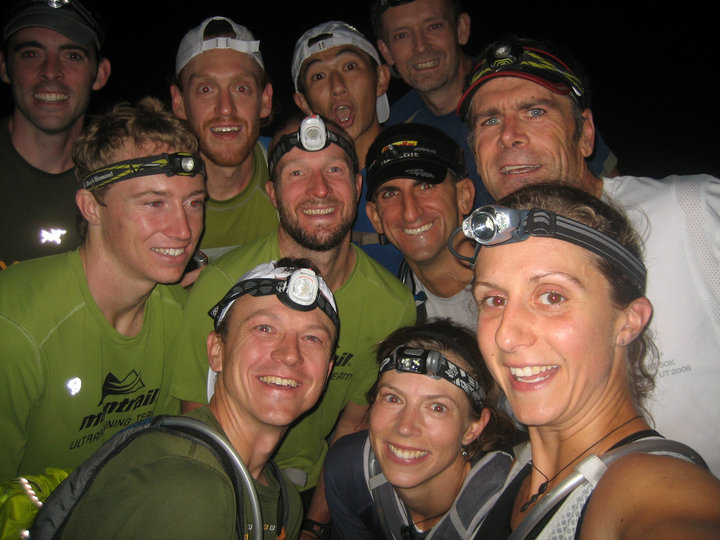
Now, even after saying this is not about runners, I have to recant a bit.  You know what – it sure as hell is about the runners. This is the Boston freaking Marathon. These are MY people. These are the ones I can identify with the most.  Someone asked me if I knew anyone who was running today. I said, yes. I know all 27,000 of them. I might not know their name and I might not have even met them but I know their struggle. I know the sacrifices they have made and the challenges they have overcome. I am one with them.  Meet a runner and instantly you know you have something to talk about for hours.

So I take all of this extremely personally.

While obviously infinitesimally smaller than what happened at 9/11, the events in Boston immediately took me back to that tragic day (I touch on this in my second book at greater length.) I remembered how I coped with what happened when nothing else seemed to work – I went for a run. Unfortunately, I got a foot infection the other day swelling my foot to twice its normal size. I couldn’t stand on it yesterday.  It is far better now but no running for a day or two.  And it is absolutely freaking killing me. I know changing my profile picture doesn’t do anything to help anyone.  I have limited to zero belief in prayer to do the same. But running could at least help me out a bit.

I have run Boston on two separate occasions. I have often said I don’t like to repeat races too often simply because there are so many other races in the world to enjoy. Well, I have a feeling I will be there next year. I need to create a better, much more wholesome, and more recent memory than the one that is sitting with me now.

This one sucks.

Monday, April 8, 2013

Be an Iron Person

The fact that long-distance running is hard on the body is hardly a novel idea. Of course, by “hard”, I do not mean “detrimental.” Let’s nip the “running is hard on your knees” people in the bud right now. What I am talking about is that running can exact a toll from you but one that pays you back in dividends later - if you simply take care of yourself. Even if you are doing things right, however, there are many things we aren’t even aware we are doing wrong which can make “taking care of yourself” difficult. An example of this, which has been brought to my attention recently, revolves around problems with iron.
Talking with Pam Reed, legendary ultrarunner and mutual fan of eating lean beef.

Iron itself is important for us endurance athletes as it binds to oxygen, which is then circulated through the lungs and to the muscles we use to power us. The downside of this is that our bodies are rather inefficient in absorbing the iron we ingest (only about 15%), with distance runners trying their best to deplete even that 15% nearly every time they go for a long hard run. The case of iron loss is even more severe with female runners, due to their genetic make-up.

Even more common than iron deficiency is iron depletion from low ferritin stores. A runner I know recently went through a long bout of declining performances, heavy legs, muscular tightness and a loss of motivation. As conditions worsened, she gave up running completely. Initial tests made her and her doctors think that something very sinister was afoot with even talk of Parkinson’s. Fortunately, further tests revealed she was simply having a hard time digesting iron and her stores were at ridiculously low levels. Added to that was the fact she was gluten intolerant. So even if she had been paying attention to her iron in a way most of us might, chances are she wasn’t getting enough. As she was trying to get her iron through cereals and the like (which do not traditionally have the best type of iron digested by the body) she was putting her body through tough spots without even knowing it.

First food I wanted after running 202 miles? Steak!
So she changed her diet, added beef (known to be one of the most easily digestible iron sources out there) and ran some of the fastest times of her life. Personally, when I am feeling worn down and a little tired I do a little check.  Chances are I haven't been taking in as much iron and protein as I should have been.  So I throw a steak on the grill and soon I am feeling great again.

The main point is that even when you are doing things right, and are often paying attention to your diet, you can forget some of the things you need in order to function at high level.

As runners, we cannot afford to be so forgetful.

Wednesday, April 3, 2013

Gorge Waterfalls 50k Recap

A Runner's Ramblings: Volume 8; 6th Edition 
1 mile skied, 5 miles biked and 80.4 miles run in 2013 races
Race: Gorge Waterfalls 50k
Place: Columbia River Gorge National Scenic Area, OR
Miles from home: 30 miles
Weather: 60-70s; sunny

As a resident of Portland for rapidly approaching a year (wow, really?!) I realized a bit ago I had not yet raced a single race in my new state. In addition, I had not taken advantage of the wonderful Columbia Gorge and all the gorgeous places one can run there. Not doing so is mostly because of my traveling schedule but somewhat because I hate driving to run. When there is so much awesomeness near your doorstep it is hard to justify driving 30 miles to find other such awesomeness.  I like my car but I like running more. However, I decided to remedy both of those deficiencies when I signed up for the Gorge Waterfalls 50k.

Given sort of a journalists entry into the race (which sold out in 75 minutes!) I wanted to do the best I could to describe the race for others while also looking to push myself to compete. As such, I going to break this recap into two different sections. The first will be to describe the race itself, and the second will be to describe my race specifically. I think far too many recaps for trail and/or ultras leave so much to be desired in terms of describing the course for those who may not be able to run on it beforehand, so I want to remedy that.


The Race Course:

My stance on beautiful vistas during races is fairly well-known: for the most part I do not care. If I am racing, I rarely see more than a few feet in front of me. In the Little Grand Canyon Marathon, a race I was fortunate enough to win (and a picture of the race around mile 25 graces the cover of my second book) I barely noticed the unbelievable beauty until post-race. Having said that, there are a select few races where I do indeed notice the scenery around me. As such, I can say without equivocation that the beauty of the Gorge Waterfalls 50k is jaw-dropping. In fact, there was no shortage of relatively competitive runners stopping mid-race simply to take picture after picture.With regards to eye-pleasingness, the race probably has few equals out there.

Of course, some of the beauty is hard to enjoy simply because of the nature of the course. While not an overly technical trail, it is run on a trail that does not exude the buttery smoothness of so many of Oregon's other trails. Rather, it is indeed tough on the footing in some areas. It is also rather twisty and turny through most of the sections, leaving runners with amply opportunities to twist ankles. In other words, one must be a little careful while enjoying the scenery not to become part of it. Granted this is true of virtually any race but is is even more so here.

The course is a simple out-and-back of ~15 plus miles. Different distances were accounted from different GPS watches and the race's stance on the absolute exactness of the distance of the course is wonderfully stated: "...if the course is not exactly 50k and this will upset you please do not do the race." That's exactly how I feel when a race has a cutoff time that some people feel is too strict.  If you don't like it, it is not as if it is the only game in town. Like just about everything the people at Rainshadow Running do, this is great.

The course can basically be broken into 4 distinct parts.

Part One:

Starting at the Benson State Park, the first section begins with a quick one mile jog around a pond fed by the Wahkeena Creek. A word of caution: about 100 yards into the race there is a small narrow footbridge.  If being in the first few to cross this unimpeded is important to you, I would sprint to the front. I got caught in a bit of a bottle neck that I never expected on a trail race. After this jaunt around the pond, you traverse through a parking lot and up onto a trail which runs parallel to where your car is parked. Enjoy this slightly rolling section because before long you will be hitting the biggest climb of the day (well, until you have to do it again coming back at the end, that is.) In the next mile and a half, give or take, you will go up ~1500 feet of switchbacks and climbs which bring basically everyone to a walk. Some people will still insist on doing that silly hopping-up-and-down-as-they-try-to-simulate-running-but-are-going-no-faster-than-you-walking-and-burning-three-times-the-energy trot. Let them. Save your energy.

Part of this section going up is on well-packed dirt, and some on a little more technical footing. You will be completely shaded against any sun, and probably most of any such rain that may fall by the abundance of glorious trees.

Cresting this mountain, you want to just let fly and for a while you can.  The footing is relatively fine and while the track is a bit narrow with some harrowing falls to the side, if you are vigilant you can pick up some time lost going up the mountain. Throughout the remainder of this downhill (and a short but slightly unexpected other set of switchbacks) is the area with both the beauty and the danger I mentioned above. Even with basically ideal footing conditions like we had on race day, there is a need to pay heed here. As you pass Wahkeena Falls, Fairy Falls, Multnomah Falls, Oneonta Falls and tons of other gorgeous rivulets which may not even have names, there are some tricky sections. I took a few sharp stones to the heels and balls of my feet that made me wince. Later on, thinking of the few brave souls wearing sandals or (I swear to god) aqua socks, I wondered how long they would be out of commission.

When you get over the most technical portion of this downhill, you are treated to some screaming downhills on asphalt.  These are also a tad bit tricky for two reasons.  The first being that the switchback nature of them rarely allow you a chance to build up a full head of steam before needing to break your ankles a bit to go 180 degrees in the opposite direction. Also, even at this early in the morning, if you are blessed with beautiful being-outside weather, you will have a plethora of hikers and tourists "clogging" the path a bit. Many are courteous but the random dog on a long-leash not being paid special attention to can make for a quick end to your race. Lots of credit to the pedestrians who made an effort to allow runners to pass and for those cheering us on as well.

Part Two:

After finishing the switchbacks, you pop out onto a short trail before running down onto the road to the first of two aid stations which you will hit twice. Very adequately stocked with all sorts of food you would expect at an ultra there are volunteers more than willing to fill your bottle or pack or what have you to speed you on your way. There is also a portapotty here and a place where you could leave a drop bag if necessary. All top-notch stuff here.

Photo by Takao Suzuki
Just as soon as you enter the road you leave it again and head back to the trail. The next four miles contain some of the most runnable sections of the trail that you will encounter all day. While the footing can be a little dicey in spots (e.g., you cross what appears to be a rock slide in one 25 yard section) the vast majority of this section allows you to thoroughly enjoy the woods. There are some places where some well-grown moss can make the footing a little slippery and I imagine on a wetter day some of the mud would be less than forgiving.

The first part of the course is known for its waterfalls. I would say this portion feels much more like a jaunt through the forest.  There are no large waterfalls in this section but there are places where the water trickles down the rocks from above. Soon the run turns into the aforementioned twisting and turning. No switchbacks to speak of but a pure trail run, leaping over a downed tree here and there, barely feeling like you are disturbing nature or that you feet are leaving any mark. Again, not a buttery smooth trail but easier to traverse than earlier.

As with the last section, this part of the course is almost entirely shaded from the sun's rays. It is also slightly cooler in the forest than it is just a few hundred yards away down on the road so it is about the best you can ask for.

After a slow but gradual downhill section you get spit out onto the road for what I think of as the third distinct part of this course.

Part Three:

This was absolutely nirvana for me. After carefully picking my way down trails and waterfalls over hill and dale, a 2ish mile section of road awaits runners before they hill the next aid station.  Mostly flat with one small rise near the aid station, this is a chance for road runners to really stretch their legs. Nothing much more to say about this other than it is a nice road with very little traffic on it. A welcome respite for some and for those who do not like road, well, you won't have to worry about it for too long.

Part Four:

After hitting another aid station as fully stocked as the first, runners will take off for the last section before turning around. This area will contain some climbs but the footing is very forgiving. This section combines the wooded wonderfulness of the second section with the waterfalls of the first.  After climbing gently for less than a mile, runners will begin a nice little section of downhill.  Before long, a quick series of switchbacks down a hill will lead to the turnaround in front of Elowah Falls. I am unsure if the race offers different ways to mark this turnaround each year so I will keep it a secret.

That's it.  Now just come back the way you came. 

Tuesday, March 26, 2013

Get Off the Sidelines

When I left the corporate world over five years ago, I did so in direct contrast to everything that had led me to that point previously. College begat grad school which begat interviews with governmental agencies which begat…52 Marathons in one year? Where in the heck did that come from? Wait, you are now moving to Utah and taking a huge pay cut to take a job in the running world? And now that job was rubbish so you are going to work for yourself? Yep.

This was not done fearlessly. For those who applaud my braveness in taking on the unknown, I am quick to tell them that half of my decisions were simply reactions to things out of my control. I am rigid but I can adapt. Both attributes have been paramount to my steadfast decision to never work an ordinary job again. Curveballs would only begin to describe what has been thrown at me as I have done my best to move forward.

Very little of it has been easy yet here, where I am now, it is obviously worth it. If I had known it would take this long and all I had to do was persevere it would have been a cakewalk.  But that’s the point: we rarely, if ever, know when the payoff of what we work for will be. So we soldier on, hoping sometimes against hope that what we seek is just around that next corner.  Here an obligatory passage about enjoying the journey on the way to the end is too easy and would be a smidgen trite. We all know we should stop and smell the roses. I am hardly need to tell you this. And sometimes, honestly, those roses stink.

Focusing on a goal and sinking our teeth into it deeply all while shrugging off the stings of arrows is what gets many of us through each tough day. You cannot do so while ignoring all that happens around you but being aware and reacting is different from knowing and being distracted. If you have a goal, and you think it is worthwhile, then do not let anyone or anything stand in your way.

Life, like running, rarely rewards those who sit on the sidelines.

Thursday, March 21, 2013

Publix Georgia Half Marathon Recap

A Runner's Ramblings: Volume 8; 5th Edition 
1 mile skied, 5 miles biked and 49.3 miles run in 2013 races
Race: Publix Georgia Half Marathon
Place: Atlanta, GA
Miles from home: 2593 miles
Weather: 50s; sunny


This is the third straight year I have taken part in a race of some nature at the Georgia Marathon, running the half in 2010 and then 5k last year. It was also a very quick trip for me, at least when it comes to time spent in town. One of the things about moving to Portland is the extra hour and a half of flight travel to most destinations.  This is definitely adding to my time spent in transit but also increasing my frequent flyer miles. Good and bad, I guess.  I landed in the evening on Thursday and barely had enough time to grab a bit to eat before I was ready to crash.  I had only been home for 72 hour from the last weekend's excursion before jetting here to Atlanta.


Ah, expos. I love you and I hate you.  This is where I get to interact with people, meet new friends, see old ones and learn and give advice.  But my oh my are you exhausting. I never thought that sitting and talking could be so tiresome until I did it. You speak to others who have worked an expo and you all share this knowing glance.  This is going to be a long day. But I am thankful for the opportunity and excited to see so many people. Just a little side note: I do have a rather good memory but if I haven't seen you in three years and you have changed various hairstyles or waist sizes, please remember that you don't have a big sign behind your head telling me who YOU are.  Give me a second and I am sure I will be able to remember far more about you than you know about me!


Unlike two years ago when I was flying out the door mere seconds before the race started, I was ready and at the race with plenty of time.  I had more or less crashed in my bed after the Saturday expo at a time I think I last went to sleep when I was 13 years old. This rest did not exactly rejuvenate me but without it I know climbing the hills of the course would have been rather daunting.


As I positioned myself where I felt I would be time-wise, I really had no idea what time I really had in me. It is only very recently I have felt like a runner again and this was not the course I wished to test my luck upon when it comes to time. Eighty-seven minutes would be great. Eighty-six would be even better. Let's just see what the day had in store, shall we.


First four miles: 6:18, 6:24, 6:48, 6:57

I remembered from running this race two years ago that the first two miles are usually right about on pace and then for whatever reason the next two miles seem long.  Granted some of the bigger hills are in this section but you would think you are still fresh enough to overcome that. I knew, however, my time would be a little slower on any uphill as I flat out wasn't going to push it too hard. There might be a medal at the end and catered drink and directional service but this race really was just a longer run that other people could see the result of instantly. So I stuck to my plan of running the downhills hard and easing off on the uphills.


Now if you want to know anything about this race, then you will know there is very little time you spend running on even flat ground.  You are either hiking up or flying back down some hill or another. I don't know how man hills there are exactly in this half marathon but someone told me that they counted 58 times when they went up a hill in the marathon.  Oof.


Miles 5-9: 20:11, 6:39

Apparently my mind went blank over the next three miles as each time I forgot to hit my watch to get the split at the mile marker.  In fact, one of the times I think I stopped the watch completely before restarting it at the next mile. Given how easy my Timex RunTrainer is to operate I really have no excuse other than user error.

By this point I was right where I feel most comfortable in a race - with no one around me.  I usually do not like people around me as it tends to throw off my pace.  When someone is hanging onto my shoulder letting me take the wind or set the effort, it irks me a little bit.  But here, right around a 1:26 pace for the half, I felt comfortable.  I felt very comfortable actually. To hit a time in the 1:26s after travel, working an expo etc on these hills would feel mighty fine.  I was running by myself and able to think about a lot of things, as I often do while running.

As we continued to go up and down, through vibrant crowds decked out in the St. Patty's gear, I got lots of cheers for my bright green Craft shirt and Karhu Flow Trainer 3. The last name might be Rauschenberg but I have an entire maternal side of Irish flowing through my veins.  (Ironically, with that make-up, I don't like alcohol.  Go figure.)

Wednesday, March 20, 2013

Old Running Memories - Blossom Time Run

Back while I was in law school, I began running races.  A little 5k here and there with the one near-disastrous first marathon throw in for good measure. I don't give much thought to the those shorter distance races from that time period, even though it is not intentional.

Looking over some unrelated papers from around that time period last night with a good friend my memory was jogged (ha) about a race I did three consecutive years with some friends in the greater Cleveland area.  Called the Blossom Time Run, it was an odd-distance 5.25 mile race in Chagrin Falls, always right around my birthday. I remembered running it twice but when looking for the results, was shocked to find out I had indeed run thrice. Memories began flooding back to me about this course and those races.

I remember the race more or less shutting down the entire city of Chagrin Falls as well over 1000 people ran it in the years I did (2000-2002.)  I recall the race being rather hilly for the two miles or so while sloping down to the finish with rolling hills the rest of the way. The paper entry form also contained the course map of such a rudimentary throwback nature you could not help but love it.  In fact, here are the course directions:

"Walkers turn right on South Street, while the runners continue out on Chagrin Road to their first right on Catsden, down to County Lane turning right, up to S. Franklin St., turning right again to the finish."

That's it. Now, you have to remember I was in law school all three years I ran this race.  So when reading it I wondered if there was a second left on Catsden or was this just the first right we could make? Does County Lane turn right and we follow it or does it continue on and we make the turn?  Will Franklin Street be up a hill or is the midwest version of "up" meaning either "north" or just "continue along"? Why right "again" to the finish?  Needless to say I had so many darn questions.

One thing was for sure and that was I was indoctrinated into how, as many runners get older, they get better. Some memories:

*In 2001, at the age of 24, I ran this 5.25 miler in a time of 34:56 at a 6:39 place.  I took 84th place overall and finished third in my age group. I distinctly remember that both guys who beat me were 25 years old and would be moving up an age group.

*In 2002, at the age of 25, I improved greatly running a 33:07 at a 6:18 pace.  However, one dark horse youngster came out of nowhere to steal first place in my age group and I settled for second. Drat.

*In 2003, besting my previous year with a 32:59 at age 26 (I pushed so darn hard to go under 33 minutes that I remember dry-heaving), only left me with a disappointing 5th place in my new tougher age group. I used to have video of this and probably still do somewhere.  Unfortunately, it is on actual "tape" and lord knows if it has degraded over time. That last little uphill was a killer.

* I also vividly recall my best friend Scott Baker, the one who introduced me to the race, running a time slightly slower in his second year than the first before knocking a full minute off in the third year. Then promptly saying he was never running again. (Not true by the way.)

I am happy to see the race is in its 37th running this year. Even with chip-timing the race is done for a measly $20 at its registration. When was the last time you paid $20 for a race?  I am pretty sure you also get a t-shirt (or did when we ran.) and there were clocks at every mile.

 I do hope to get back to it sometime. It would be a great test of fitness to see where I stand now.  By all accounts I should be able to run close to 31 minutes or so. It would be fun too know that a decade later I am still getting faster on some courses.

That is what is so wonderful about this sport of running. I see why people go and run the same courses year after year.  It is not my bag to do that all the time as I love seeing the country and exploring all the wonderful races that the world has to offer.  But familiarity and being able to compare yourself against the years aare too wonderful yardsticks.

What do you say, Scott? Wanna shoot for 2014?

Friday, March 15, 2013

X-Trifecta Winter Triathlon Recap

A Runner's Ramblings: Volume 8; 4th Edition 
1 mile skied, 5 miles biked and 36.2 miles run in 2013 races
Race: X-Trifecta Winter Triathlon
Place: Macungie, PA
Miles from home: 2837 miles
Weather: 40s-50s; bright sunshine


Diversify. It is good to do in life and it is good to do in racing.  It is also good to have an idea what you are getting into when you do.

I took on the X-Trifecta winter triathlon this past weekend.  I did not do so lightly, per se, but I did not do so with the full knowledge needed to do well.  More accurately, I did not take on the event with the full skills needed to do well.

The X (that's what I am calling it for this recap)  is a triathlon different than virtually every other race out there.  Starting off with a ski or snowboard portion, athletes then take on a technical (pay attention to that word) mountain bike course, followed by a trail run following much of that same course. It would behoove you to actually have skied before in your life but even more so to have done some mountain biking before taking this event on.  I had done neither. Ever.

To be honest, my focus for the last few months was on a few other events, more specifically getting myself ready for a running across of Panama which got postponed. The challenging Fuego Y Agua 25k in Nicaragua left me barely enough time to recover and start to run well again before the X popped up. I knew the skiing portion would be tough and my theory was that rather than try to take a couple of lessons, it might be best to just throw myself into it and hope to make it down the hill upright.  With just 3/4 of a mile, mostly downhill, how difficult could it be? Stop laughing.

My friend Jessica, in the same boat when it came to skiing and mountain biking accompanied me to the race. Her attitude of simply just trying something new and challenging was virtually the same as mine. When we got the hotel we were both staying at to meet with the race directors, we found they were about to start putting together the packets for the race.  Not ones to idly stand by, we pitched in and had the packets thrown together in no time.  I received final instructions on where my bike, helmet, skis, poles, boots and everything else would be on race morning and began to feel for the first time I may have bitten off a little more than I was ready to chew.  No turning back now.

Race morning:


Getting to the event locale with plenty of time, I realized that while a typical triathlon requires a great deal more planning than a simple footrace, one of this nature takes even more. In addition, as the slopes of Bear Creek Mountain Resort loomed behind us, it was more than a little humbling to see 3 year olds swooshing down hills I know I would easily faceplanted upon if I tried. But before long, all the gear was in its appropriate place and it was time to put the skis on for the first time - you know, about five minutes before hurtling down a hill.

Jessica and I were seeded in the same wave of skiers and we slid across the 20 feet of snow to the chairlift to begin the ride to the top. This was interesting to say the least.  Once on the lift, we only later learned that we had not put down the safety bar to keep us from falling out. Someone might have wanted to tell us that.  As we rode to the top, we watched the people going down, jokingly saying this was going to be our ski lesson. I hoped in that brief ride I would be able to glean some semblance of wisdom to keep me upright.

When we hit the top I told Jessica we would have to do a small hop off of the chairlift seat and then slide down the small ramp. Let's just say she wasn't quite ready for this. Next thing I know, I got a ski in the back and was sent sprawling.  Poor Jessica was about to head back down the hill on the chairlift before the operator stopped it.  She unceremoniously fell off of the chair, the whole time worrying that she had hurt me.  I was completely fine but worrying the same about her.  I had landed in the snow where she had sort of slithered down some wooden stairs. While the attendants were nice enough, they seemed more annoyed than anything. I guess most people don't go up a chairlift without ever having had skis on before.  They seemed perplexed that we had never skied previously but helped us get over to the starting line. A few minutes would pass and soon it would be our time to go.

Thursday, March 7, 2013

I'm Not Going Barefoot

It matters to me not if you run barefoot.

I honestly could not possibly care less. If it works for you to not run in ANY shoe ever again, it affects me in no way, shape or form. Actually, that is incorrect. If it gets you out running pain-free and allows you to enjoy the sport you no longer were able to enjoy because shoes appeared to be the bane of your existence, then it does affect me, because I am now happy you are out running again. But holy mackerel please do not try to convert me.

I have now spent a great deal of time scientifically researching the human body when it comes to how it works while in motion. I have questioned runners of all calibers and speeds. I have friends in the medical field in every discipline (doctors, nurses, massage therapists, etc.) who know way more than me about the mechanics of running and how my muscles work than I could ever hope to. Yet even these friends, who are all very learned and make their living knowing about the human body, can disagree on seemingly the most simple of things.

I do know, very well, what works for me, or at least what has worked in the past and will hopefully work in the future. If whatever I am doing stops working, I will modify what I am doing in hopes of making it feel right again. But if what is working is indeed working, why would I wish to change it?

Often studies are shown to me by the barefoot running aficionados of how shoes have hindered runners and caused injuries. I have said I am extremely sorry for those runners and wish they could run pain-free. But they are not me. I have run 142 marathons, pushing myself in almost every single one of them and have averaged under 3:20 (including time-skewing upward marathons like Leadville and Pikes Peak). Fifty-two of those were done in one year without a hint of injury. Furthermore, I have run all of the nearly 20 million feet of those marathons in running shoes. That doesn’t even count the training, half-marathons, 5Ks, and running to catch airplanes.

Chances are the next million or so feet will be traversed in running shoes as well. I have dabbled in minimalist running shoes and remember the days of super clunky shoes in the 1990s. I have tried the trends and fads as I always wish to be experimenting lest I leave behind something important. But after years of one thing working with unequivocal success, I will stay shod.

So, while I appreciate how much running barefoot has done for you, please remember as the wonderful Dr. George Sheehan said: “We are all an experiment of one.” In other words, we have to find what works for us. No one can run the race for you and only your own legs will propel you forward.

And for the time being, my legs will end in rubberized soles.

Monday, March 4, 2013

1981 Cascade Run Off

Last week, I went to a viewing of the 1981 Cascade Run Off but on by Run Portland.  If you don't know what this race is, well, you should.  Not should in the "runners are the bestest and you should know the history of every little tiny race that ever existed" type of should.  But should in the "it more or less effects every single aspect of sporting events in the United States since its running."

So what makes the Cascade Run Off so memorable? Well, for the first time, runners openly accepted prize money, ringing the death knell of what was known as shamateurism. It is hard for many to believe today that there was an era, let alone decades, of time when people could not compete openly for money in whatever sport they wished. However, with Olympic glory more or less being the only way many athletes (especially runners) had any chance of making any sort of living whatsoever off of their abilities, runners had to do everything they could to make sure their ability to run in those games wasn't taken away from them. Openly accepting any sort of prize money would be one way to all but guarantee a lifetime ban.

When the runners who came to this race decided to do so, they knew full well what the potential dangers were.  They knew this could mean they would never race in an Olympic games again and any shot at representing their countries at home or abroad as a runner would be done. What was special about this reviewing (and those wishing to watch some grainy film that feels about 30 years older than the 30 years it is can find online) was the race director of the Cascade Run Off, Chuck Galford was there to give us some history of the race, especially the epic 1981 running. It is one thing to listen to those who have heard secondhand what went down- it is another to listen to the man responsible for the race existing.

I have personally been fortunate enough to talk to two key components at length about that day's events.  Bill Rodgers, who took fourth overall, once shared some interesting perspectives on that day as we went for a run in Pittsburgh a few years back. Anne Audain, who won the women's race, filled me in on a great deal of her personal feelings about the race when we met in Boise back in 2010. 

Without a doubt, the boycott of the 1980s Olympics by Jimmy Carter fueled an ever-burgeoning balloon of amateur athletes who were against the ability to make a buck off their talents.  Robbed of what was for many, their only shot to compete, they saw little reasons to worry about what the downside would be.  With races exploding in numbers and more people running than ever before, the time seemed right to take a stand.

Unintended implications can now be seen emblazoned on shirts like "In my dreams I am a Kenyan."  When elite runners from other countries saw that a few big paychecks could more or less fund not only their training but sometimes the training, food, schools and virtually entire livelihood of some villages, the entire landscape of running changed.  When people wonder what happened to American runners in the past three decades and how until only very recently have we become to be competitive again, they needn't look much past that warm day in June in Portland. There are obviously other factors which contributed to a lull in American dominance but when the talent pool increases, matters become different.

Regardless, to think that such things like NBA stars in the Olympics and paychecks for elite runners which allow them to not have to work 40 hours in a retail store (while the latter still is far too prevalent) can more or less trace their roots back to a 15k held in the Pacific Northwest, it is good to know a little bit about that race.

(For more info I suggest checking out this great Running Times article from two years ago.)

Friday, March 1, 2013

The Wonderfulness of the Track

While for many, the winter is not the time to talk about track workouts, I have recently received a few questions about what I think about hitting the oval, so I felt I would share my viewpoint. Here it is: I stand by track workouts for every racing distance. Period.

My lifestyle these days is different from most of my friends. However, a few years ago I had a normal office job. I commuted to work alone. Once there (as the first one in the office), I would go to my corner office and work. The company I worked for had very few employees. I rarely ate lunch out of the office, using my lunch hour to work out and almost always carrying my lunch. (The latter saves so much money that it is ridiculous. People wonder how I could afford to run 52 marathons in one year. I swear that little money-saver alone paid for half of it.) I would then commute back home alone. So I rarely actually saw other humans during the workday.

At the track, however, even though there is little talking going on (if you are talking you are not working out hard enough) there is still interaction. Being with other runners, learning about their races, hearing the inevitable litany of injuries, (some real, most imagined) is the juice that helps many of us get over what can often be a solo sport.

My life has changed since my office days. Until race weekend, I see even less people than I used to with the office job. I enjoy running most of my miles alone.  Or perhaps I have realized that when I have time to run I will be running alone and therefore have adapted. Regardless, I thoroughly look forward to the simple social aspect of hitting the track and being amongst others who are pursuing similar goals.

But more important than the social aspect, is the exact science of the track. There are definite splits. No needing to guess how far you have run. You know it. Every lap is 400 meters. There is no way around it. No stoplights exist to give you a break, there is no traffic to avoid (impolite walkers in lane one notwithstanding) and a soft forgiving surface rests at your feet. Exactitude, I like to call it. Too tired to do miles? Well, push hard on some 800s. Looking to blow some gunk out of the gaskets? Let it all fly on some 200s. Do as many as you want, as hard as you want of any distance. You are never far from your gear, water or anything else you may need in case you absolutely must stop.

The track gives you a chance to run fast. Everyone likes to run fast. No one actually wishes to run slower. And there is something about the track that makes it okay to actually want to be as fast as you can. You are not showing anyone up by blowing past them on the track. It is just fine to want to chug away as hard as you can. No one thinks you an elitist because you have the need for speed.

Moreover, runners of all distances whom I have spoken to, worked with, and run alongside swear by track workouts as a way to increase their strength, speed and enjoyment for the sport. You don’t need to actually ever run a single race on a track (although I highly suggest you do) to get benefits from what these track workouts will do for you. Often I have heard about “training like a miler to run a fast marathon.”

The benefits of this little, often orange, oval are nearly limitless. It should definitely be an arrow in any runner’s quiver.